
After one humid season in a coastal apartment block in Manila, the painted MDF skirting had to be replaced. Joints that were knife-tight in February stood 2 mm proud of the wall by June, and the paint film along every mitre had cracked. The contractor repaired the damaged runs with wood plastic composite skirting and recorded zero visible movement in the following year. That result is exactly why specifiers are moving baseboard specifications away from timber, MDF and foamed PVC.
Wood plastic composite skirting combines screened wood fiber with a thermoplastic polymer - usually HDPE, PP or PVC - extruded into dense, uniform profiles that machine like wood but behave like plastic when wet. This guide covers the material composition, the performance numbers that separate good profiles from cheap ones, the installation sequence that prevents callbacks, and the cost math that decides whether WPC skirting pays back on a real project.
Wood plastic composite skirting is an extruded interior trim profile that blends wood fiber with a thermoplastic polymer, typically in a 50/50 to 70/30 wood-to-polymer ratio by weight. The polymer fraction is most often high-density polyethylene (HDPE), polypropylene (PP) or PVC; the wood fraction comes from screened sawdust, wood chips or rice husk flour. During extrusion, the molten polymer coats every wood particle, sealing the composite against the capillary water uptake that destroys solid timber.
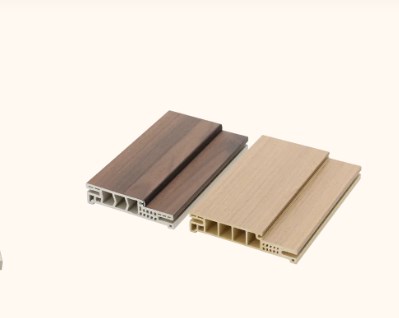
The specification detail that matters most is co-extrusion. A second extruder applies a thin polymer cap - normally 0.3 to 0.8 mm - over the core profile while both layers are still molten. The cap carries the color and embossed grain, seals the surface, and changes the maintenance profile completely. A single-layer WPC board stains and fades at the surface over time; a co-extruded profile wipes clean and keeps its original color for decades.
The wood fraction gives WPC rigidity and a familiar screw-holding feel. The polymer fraction gives it moisture resistance, dimensional stability and termite immunity. Getting that balance wrong at the compounding stage - too much wood, or poor coupling agents - produces the brittle, water-absorbent profiles that gave early WPC a bad reputation.
Co-extruded WPC skirting outperforms painted wood and foamed PVC in humid service conditions because it combines wood-grade rigidity with plastic-grade moisture resistance. Timber and MDF move with every humidity swing; foamed PVC stays dimensionally stable but dents, tears at screw points and shows scratches easily.
| Property | Painted wood / MDF | Foamed PVC | Co-extruded WPC |
| 24-hour water absorption | 8-17% | 0.1% | 0.4-0.8% |
| Dimensional movement at high humidity | Moderate to high, visible joint gaps | Low, but soft surface | Very low, stable joints |
| Termite risk | High in tropical regions | None | Very low |
| Impact and scratch resistance | Medium | Poor, dents easily | High |
| Surface maintenance | Repaint every 2-3 years | Wipe clean, marks easily | Wipe clean, color molded in |
| Realistic service life | 5-8 years | 15-20 years | 20-25 years |
The failure modes behind those numbers are covered in detail in our comparison of WPC skirting with wood and PVC profiles. The short version: timber fails by moisture, PVC fails by surface softness, and WPC fails at neither pace in an interior environment.
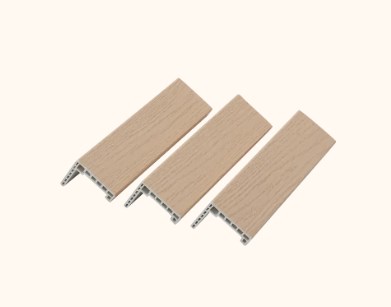
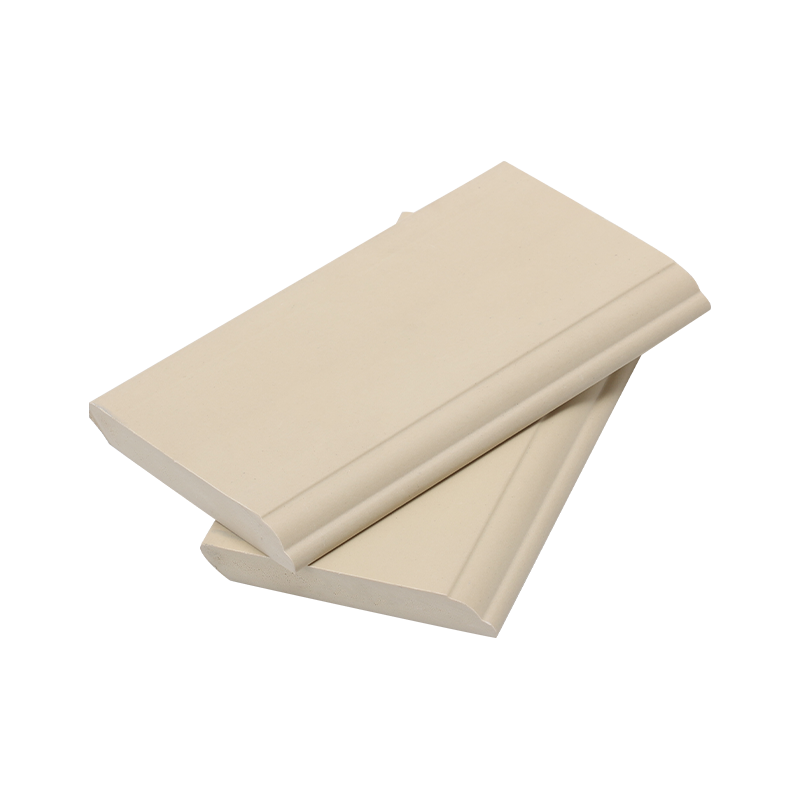 WPC Skirting Profile with Waterproof and Moisture-Resistant CoreThis skirting is made from wood fiber and thermoplastics via extrusion, offering waterproofing and environmental safety. Its performance depends on core density and cap-layer thickness, so inspect these specs rather than surface appearance alone.View Product →
Four specifications decide whether a WPC skirting profile will hold up on site: core density, cap-layer thickness, pigment method and the extrusion control of the manufacturer. Buying on surface look alone is the most common purchasing mistake.
Profiles with that level of documentation come from manufacturers with real extrusion lines and quality control. Jiangyin Gwing Technology Co., Ltd., a polymer composite producer operating since 2005, publishes its production setup on the factory page.
To keep grain, color and profile thickness consistent across a room, pair the skirting with WPC door architraves from the same product family. Mixed suppliers often produce visibly different surface textures, which becomes obvious the moment skirting and architrave meet at the door opening.
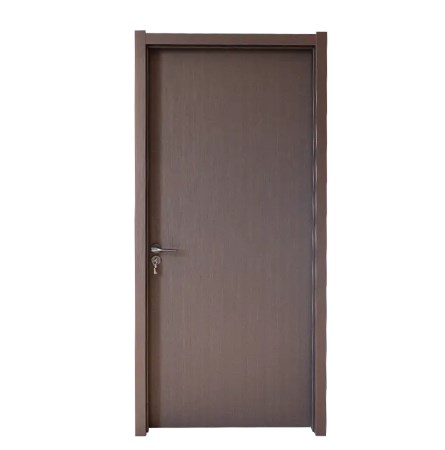
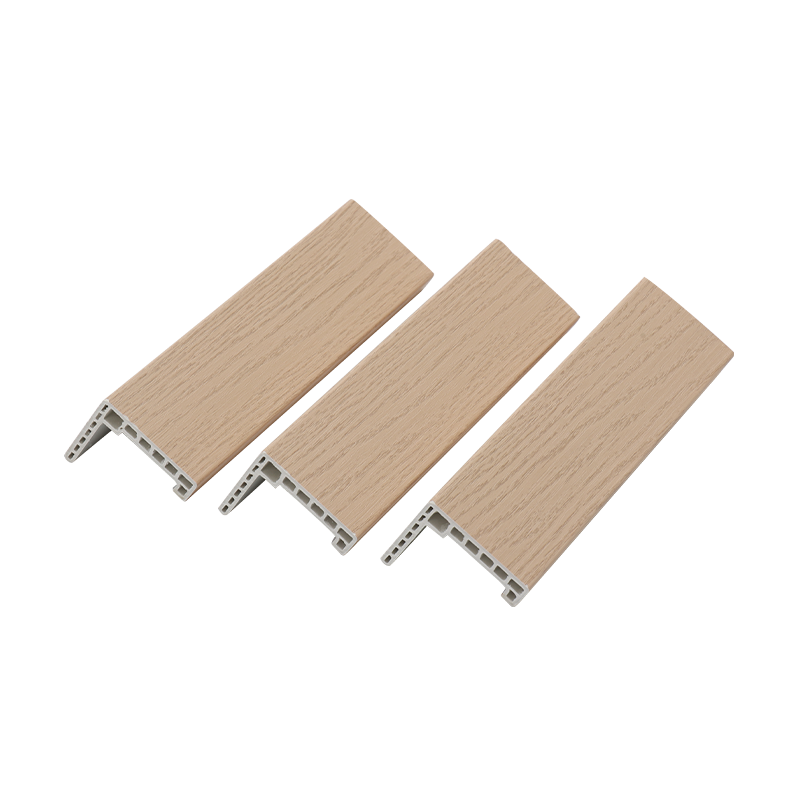 WPC Door Architrave Matching Skirting for Consistent Interior TrimThis door architrave from the same product family as the skirting ensures consistent grain and texture at door openings. Its fireproof, waterproof, and impact-resistant properties suit humid areas, but proper acclimation and expansion gaps remain essential for installation.View Product →
Most WPC skirting callbacks trace back to three correctable mistakes: no acclimation, no expansion gap and the wrong adhesive. WPC moves less than PVC - typical linear expansion runs around 0.2-0.4% - but every material moves, and fixed-length runs without gaps will push joints apart or buckle.
WPC skirting costs more up front than PVC or MDF, but it eliminates the repainting and replacement cycles that make timber baseboards the most expensive choice over a 20-year ownership period. The relevant comparison is never one meter against one meter - it is one material lifecycle against another.
Run the numbers on a typical 12 x 12 ft bedroom: roughly 15 linear meters of skirting. Moving from foamed PVC at $0.5-1.0 per meter to co-extruded WPC at $2-4 per meter adds about $20-45 to the material bill. A single repaint of a timber baseboard run costs more in painter labor than that difference - and the repaint has to happen every two to three years anyway.
WPC skirting is moisture-resistant, not aquarium-proof. The polymer fraction and co-extruded cap keep 24-hour water absorption below 1%, but standing water against an uncapped cut end can still wick slowly. Seal end cuts in wet zones and keep standing water away from the profile base.
Yes. Tiled walls are among the most common substrates. Score the glaze, clean the surface, apply a solvent-free hybrid adhesive, and hold the 2-3 mm expansion gap at joints. Pin nails will not hold in glazed tile, so add mechanical fixing points every 40 cm if the adhesive alone is not trusted.
No. The co-extruded cap has the color molded in, which is the entire point of the product. Painting a WPC profile voids its maintenance-free benefit, and the paint will eventually wear at edges, joints and vacuum-cleaner contact points.
Allow 2-3 mm between straight profiles and 5 mm at inside corners. In rooms with strong solar exposure through large windows, use the upper end of the range. Cover the gaps with matching cap profiles or a flexible sealant rated for WPC.
Notícias recomendadas

 linguagem